
Healthcare
Digital Detox: Why Your Brain Needs a Break From Screens

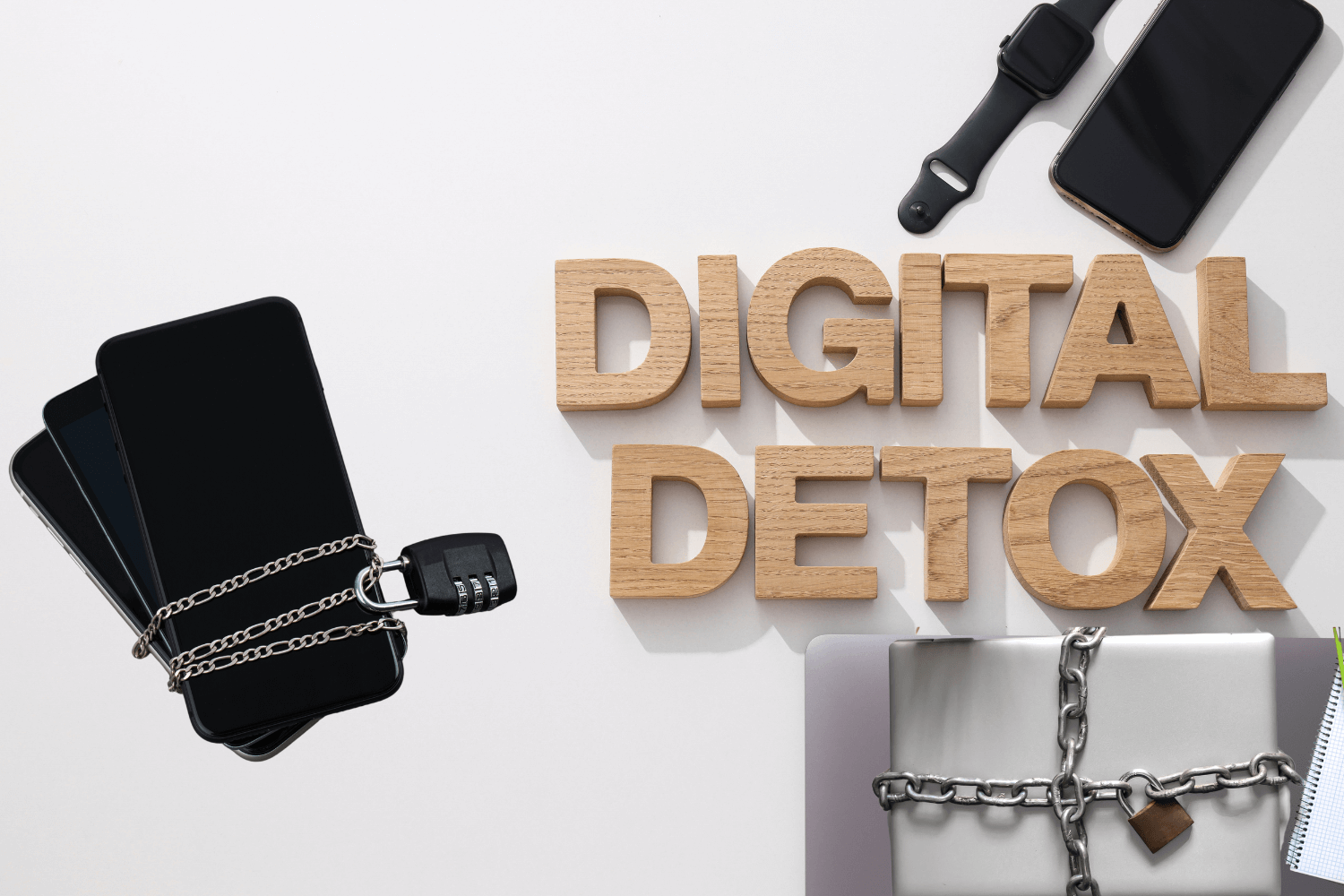
Screens are all around us — in our pockets, on our desks, even by our bedsides. From smartphones and laptops to TVs and tablets, it seems like we’re always plugged in.
While technology has brought great convenience, it’s also changed the way we live, work, and rest. If you’ve ever felt tired after a long day of scrolling or struggled to focus, your brain might be asking for a break. That’s where a digital detox comes in — and it might be just what your mind needs.
The Mental Impact of Too Much Screen Time
Spending hours staring at screens can leave you feeling drained. Research shows that excessive screen time is linked to increased stress, anxiety, and poor sleep.
It also affects how we focus. With endless notifications and constant scrolling, our attention spans have shortened. It’s harder to stay present or enjoy quiet moments. Our brains weren’t designed for this level of stimulation, and it’s starting to show.
How Screens Affect the Brain Physically
The blue light from screens can confuse your brain’s sleep signals. It blocks melatonin, the hormone that helps you wind down, making it harder to fall asleep and stay asleep.
Apps, especially social media, are designed to keep us hooked. Every like, swipe or notification gives a hit of dopamine — a reward chemical. This can make it harder to stop even when we want to. Physical symptoms like eye strain, headaches, and neck tension are also common after too much screen use.
Signs You Might Need a Digital Detox
Here are a few signs your brain might be craving a break:
- You feel constantly distracted or can’t concentrate
- Your sleep is light, broken or filled with screen-related dreams
- You forget things more often
- You feel anxious or low after scrolling
- You check your phone even when there’s no alert
If these sound familiar, a small step toward a digital detox could help.
Simple and Mindful Ways to Take a Break
You don’t need to give up screens completely — just create healthier habits. Try these small, simple changes:
- Set screen-free times in your day, like during meals or the hour before bed
- Turn off non-essential notifications so you’re not constantly interrupted
- Start a “no phone morning” to enjoy your first hour without distractions
- Replace scrolling time with something relaxing — like reading, walking, or journaling
- Try a weekend “digital sabbath” — one day offline to reset and recharge
These mindful breaks allow your brain to rest and refocus.
Average Daily Screen Time vs Healthy Limits
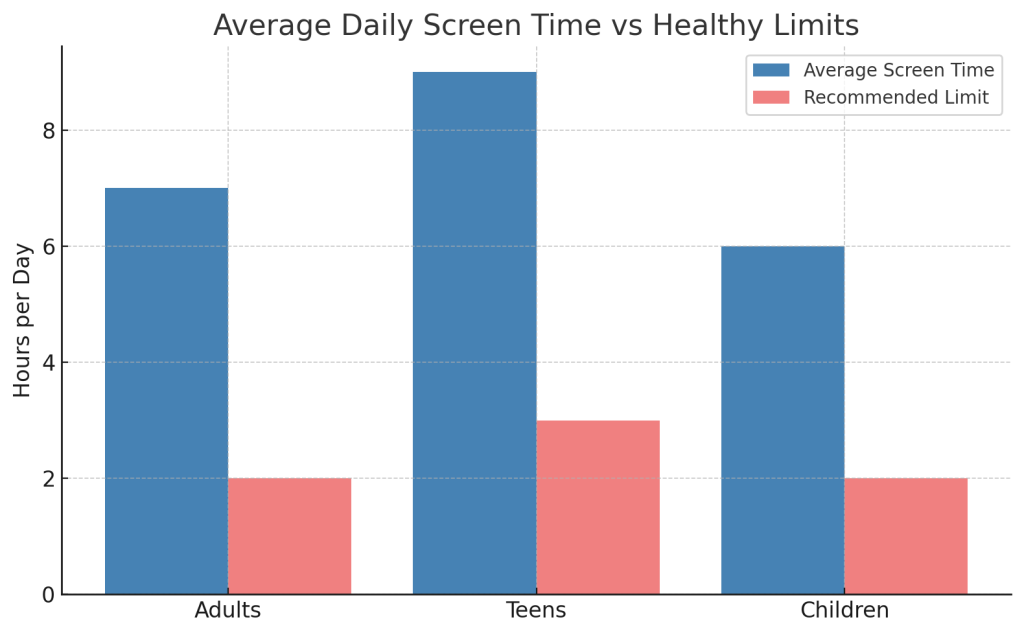
This chart shows how much screen time people typically have compared to what’s considered healthy:
- Adults are averaging 7 hours a day, while experts recommend just 2 hours for non-work-related use.
- Teens often hit 9 hours, far more than the suggested 3 hours.
- Children, too, are spending 6 hours on screens, when ideally it should be 2 hours or less.
Benefits of Taking Screen Breaks
Once you start taking regular breaks from screens, you’ll likely notice some real benefits:
- Improved mood and mental clarity
- Deeper, more restful sleep
- Better focus and memory
- Stronger real-life relationships
- More time for hobbies, creativity, or simply doing nothing — which is sometimes just what we need
Conclusion
Screens are a big part of modern life, and that’s okay. But constant connection comes at a cost. A digital detox doesn’t mean ditching your devices — it means finding balance.
By taking small, mindful steps, you can give your brain the breathing space it deserves. Start with a few minutes here and there, and notice how much better you feel.
Because sometimes, the best way to reconnect — is to switch off.


You must be logged in to post a comment Login