
Science & Nature
The Earliest Sunrise Comes Up to a Month Before the Summer Solstice

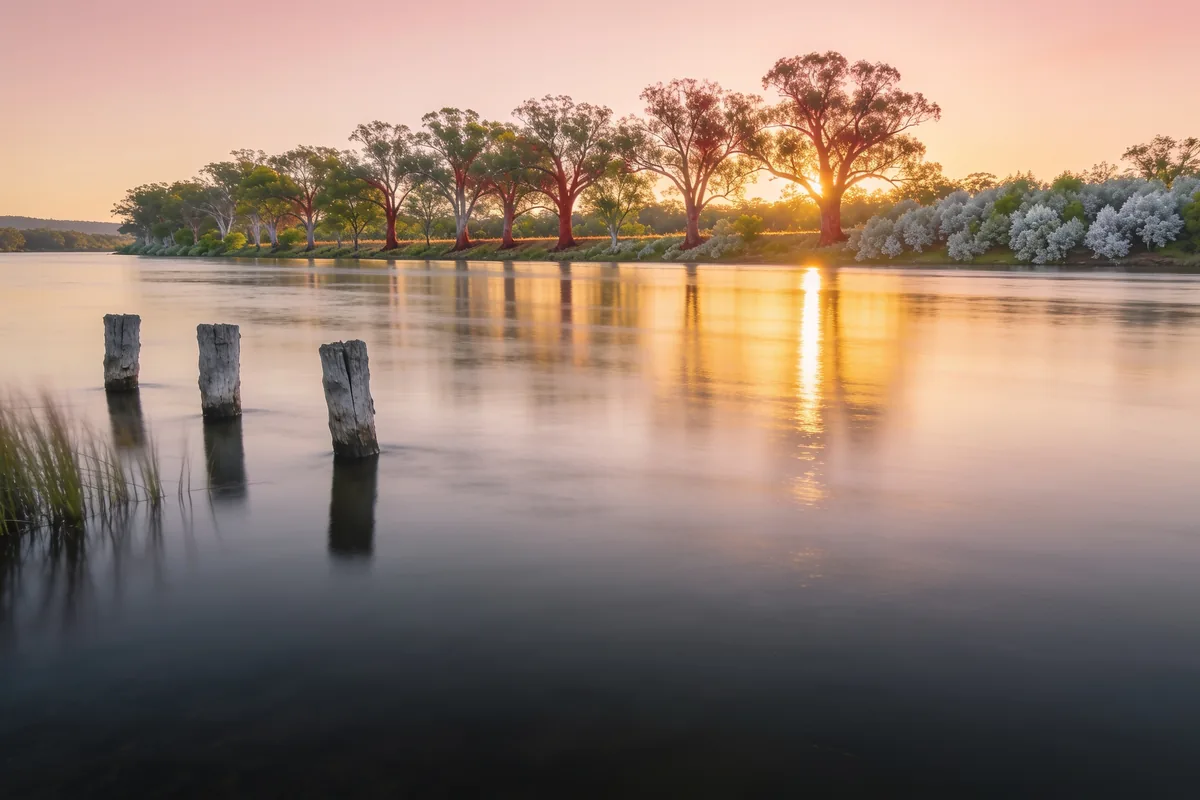
The bench catches it first. A strip of light comes through the kitchen window, climbs the cupboard door and settles on the wood by the kettle, and it’s there before the alarm has managed anything useful. The curtains were meant to hold it back. In early December they never do, because the sky behind them has been pale since well before anyone wanted to be up.
Outside, the first birds are loud and certain. The street is a clear, rinsed blue, and whoever is awake at that hour gets the odd feeling of being handed something: a morning that has turned up early and in full.
It would be easy to take this as the peak. The year is heading for the summer solstice, the longest day, so surely the sunrise should keep creeping earlier until it gets there. Then evening arrives, and the same sky stays bright well past dinner, later than it did a fortnight ago. By the time the plates are cleared, the two ends of the day seem to be running to different calendars.
So which end belongs to the solstice’s schedule, and which doesn’t? And why would a bright early morning and a long late evening not share a date?
The two ends of the day keep their own calendar
The short version is that the longest day and the earliest sunrise are different days, and in every Australian capital they sit weeks apart.
Geoscience Australia describes the summer solstice as the December day when the Sun’s path reaches its highest point, which gives that day the most daylight of the year. It usually falls on 22 December and can land anywhere from the 21st to the 23rd. In 2026 the moment arrives at 7:50 am AEDT on Tuesday 22 December, according to timeanddate. The same Geoscience Australia page makes the point this post turns on: the solstice does not carry the earliest sunrise or the latest sunset. The earliest sunrise comes before it. The latest sunset comes after it.
So plan by the right date. Use the solstice for the longest day. For the earliest dawn or the latest dusk, use the dates in the table further down, which sit anywhere from 12 to 32 days either side of 22 December depending on the city.
Most explainers stop at the floor of the subject. The solstice is the longest day. Daylight runs from about 12 hours 52 minutes in Darwin to about 15 hours 21 minutes in Hobart. The days shorten afterwards. All of that is right, and none of it says when the earliest morning falls.
The missing piece is that the length of the day barely changes for a long stretch around the solstice. In Sydney’s published daily table, 21 and 22 December tie to the second. When the total is that flat, sunrise and sunset are free to wander across the clock without changing it much. That wandering is the next section.
Why the clock and the Sun drift apart
Clock time is an average. A clock day runs 24 hours, every day of the year, without exception. The Sun doesn’t keep to that. The timeanddate page on the equation of time describes the gap between the Sun’s own time and the clock’s, and it says the Sun’s day can run up to 22 seconds shorter or 29 seconds longer than 24 hours.
Two causes sit behind it, and both are on that page. The first is the shape of Earth’s orbit. The planet moves faster when it’s nearer the Sun, which happens around January, so its pace along the orbit isn’t steady. The second is the tilt of the axis. The page says both factors affect how quickly the Sun appears to move across the sky over the course of the year, and together they pull the Sun’s day away from the clock’s.
Around the December solstice, the Sun’s own day runs longer than 24 clock hours. In practice that means solar noon turns up a little later by the clock each day, and sunrise and sunset move later with it. The total amount of daylight stays almost level around the solstice, because that is when the Sun’s track across the sky reaches its highest point. The clock-time drift is a separate effect: it moves the day along the clock, and does not stretch it.
Sydney’s published December table shows it in four numbers. Sunrise is 5:36 am on the 6th and 5:41 am on the 22nd. Sunset is 7:55 pm on the 6th and 8:05 pm on the 22nd. Over those sixteen days the morning slides five minutes later and the evening slides ten. The morning gives up less than the evening gains, which is why the dawn seems to stop improving while the evenings keep stretching.
Summer solstice Australia by capital city, December to January
The table sets the earliest sunrise and the latest sunset beside the sunrise and sunset on 22 December for each capital. It’s a summary computed for this post and checked against the published daily sunrise and sunset tables for each city, so it’s a guide rather than official data. Times are clock times at each city centre, truncated to the minute the way the published tables appear to be. Five capitals are on summer time: Sydney, Melbourne, Canberra, Adelaide and Hobart. Brisbane, Perth and Darwin keep standard time. Each date is the middle of a stretch of days on which the published table shows the same minute, and the last column gives that stretch, so read every date as “about”.
Sunrise and sunset clock times for the eight capitals, early summer 2026-27 (times truncated to the minute)
| Capital | Earliest sunrise (about) | Sunrise on 22 Dec | Latest sunset (about) | Sunset on 22 Dec | Days from 22 Dec to each | Days the published table shows that same minute, sunrise / sunset |
|---|---|---|---|---|---|---|
| Hobart | 5:25 am, 10 Dec | 5:28 am | 8:52 pm, 3 Jan | 8:49 pm | 12 / 12 | 6 to 14 Dec / 30 Dec to 7 Jan |
| Melbourne | 5:51 am, 8 Dec | 5:54 am | 8:45 pm, 5 Jan | 8:42 pm | 14 / 14 | 2 to 14 Dec / 30 Dec to 11 Jan |
| Sydney | 5:36 am, 6 Dec | 5:41 am | 8:09 pm, 7 Jan | 8:05 pm | 16 / 16 | 6 Dec only, 5:37 am on 1 to 5 and 7 to 13 Dec / 31 Dec to 15 Jan |
| Canberra | 5:41 am, 6 Dec | 5:45 am | 8:21 pm, 7 Jan | 8:18 pm | 16 / 16 | 2 to 11 Dec / 30 Dec to 14 Jan |
| Adelaide | 5:54 am, 6 Dec | 5:58 am | 8:33 pm, 7 Jan | 8:29 pm | 16 / 16 | 2 to 10 Dec / 4 to 9 Jan |
| Perth | 5:03 am, 5 Dec | 5:07 am | 7:26 pm, 8 Jan | 7:22 pm | 17 / 17 | 28 Nov to 12 Dec / 2 to 15 Jan |
| Brisbane | 4:44 am, 2 Dec | 4:49 am | 6:47 pm, 11 Jan | 6:42 pm | 20 / 20 | 27 Nov to 7 Dec / 4 to 19 Jan |
| Darwin | 6:10 am, 20 Nov | 6:19 am | 7:19 pm, 23 Jan | 7:10 pm | 32 / 32 | 13 to 28 Nov / 14 to 31 Jan |
Three things stand out.
The first is the size of the gap. From the earliest sunrise to the solstice it’s 12 days in Hobart, 14 in Melbourne, 16 in Sydney, Canberra and Adelaide, 17 in Perth, 20 in Brisbane and 32 in Darwin. “Up to a month” holds for Darwin and for Darwin alone. Brisbane, the next widest, is 20 days.
The second is the symmetry. The latest sunset falls as many days after 22 December as the earliest sunrise fell before it. In this table the two match in every capital, to within a day.
The third is the plateau. Every date in the table is the centre of a flat stretch. The sunrise stretch runs from nine days in Hobart and Adelaide (6 to 14 and 2 to 10 December) to sixteen days in Darwin (13 to 28 November). Sydney is the narrow case: its table shows 5:36 am on 6 December only, with 5:37 am on the days either side. Naming one day is a convenience of the table; the light is much the same across the whole stretch. These are the dates for 2026 and early 2027, and they can shift by a day in other years.
Why Hobart and Darwin disagree
Read the table from top to bottom and the gap grows with the city’s distance from the south. It’s 12 days in Hobart, the southernmost capital, and 32 in Darwin, the northernmost. The rows run roughly in order of latitude, and the gap never narrows on the way up. Darwin’s is more than two and a half times Hobart’s.
The minutes follow the same pattern. Darwin’s earliest sunrise, 6:10 am, is 9 minutes ahead of its sunrise on the solstice. Hobart’s, 5:25 am, is 3 minutes ahead. The northern city has the wider gap in days and the bigger swing in minutes.
The sources behind this post explain why the Sun drifts against the clock, as covered above, but they don’t set out why the gap shrinks towards the pole. So this post reports the pattern the table shows and doesn’t offer a derivation.
There’s also a common wrong guess to deal with, which is that daylight saving causes all this. The table answers it. Brisbane, Perth and Darwin keep standard time all year, and they show the same kind of gap as everywhere else: 20, 17 and 32 days. Summer time moves every clock reading in the five cities that use it, so their times in the table are summer-time readings, but it doesn’t change which day comes first. The drift sits in the Sun’s own timing, so changing the clock doesn’t touch it.
What the plateau means for early risers and evening plans
For anyone who gets up early on purpose, the table has a practical edge. The earliest-sunrise stretch is a week or two in which the minute barely moves, so a swim, a run or a bird count planned for first light doesn’t get brighter by waiting for the solstice. The light arrives at about the same time all through that stretch and then, slowly, a little later.
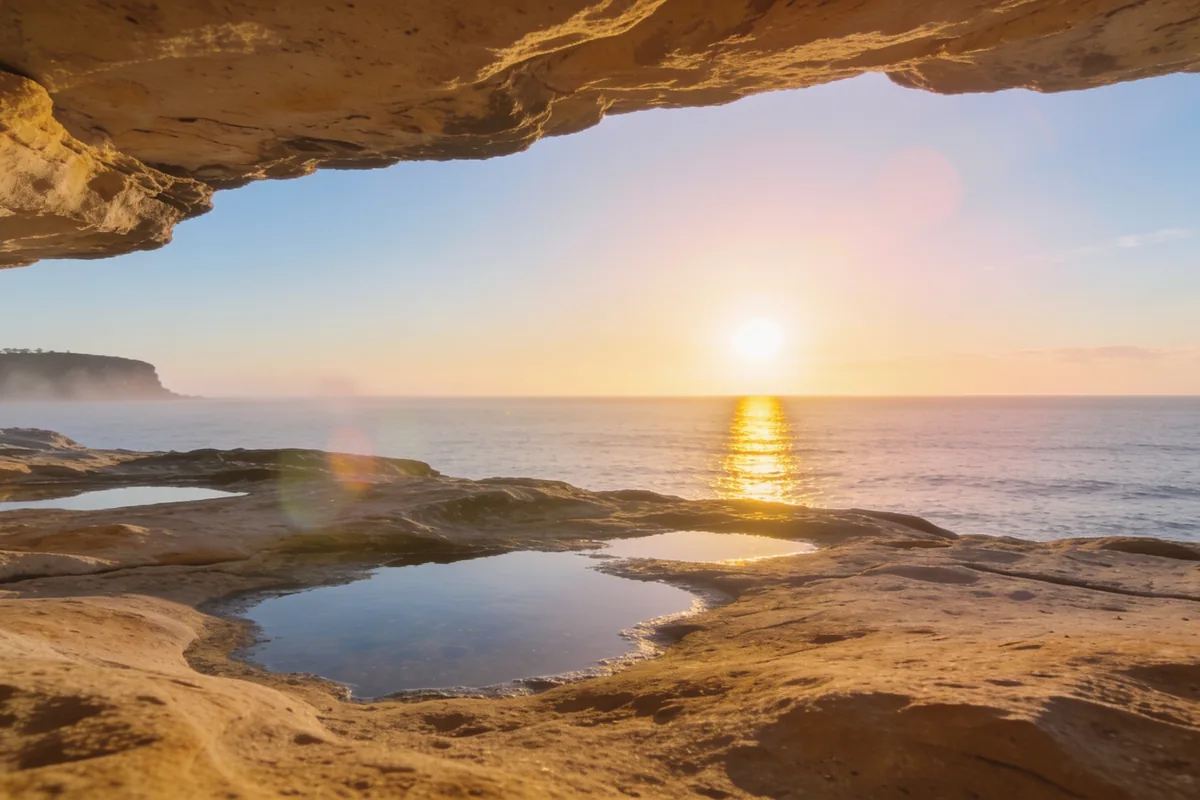
Darwin is the one place where a reader can check this against their own window this week. The table has its earliest-sunrise stretch running from 13 to 28 November, at 6:10 am. If the morning light looks much like last week’s, that’s the plateau.
Evenings run to a longer timetable. After the solstice the days begin to shorten, yet the sunset keeps edging later. The morning is giving up more than the evening gains, but the evening is still gaining. In Sydney the sunset reaches 8:09 pm on 31 December and holds it until 15 January, so the latest sunset, about 7 January, sits in the middle of that stretch. Anything planned around the end of the light, from a barbecue to the flying-fox fly-out at dusk over a suburban street, runs on that same moving sunset.
None of this makes “longest day” a poor phrase. It’s a good everyday shorthand, and the difference is small in minutes: in each capital the earliest sunrise is only 3 to 9 minutes ahead of the sunrise on 22 December, and the sunset gap is the same size. The day itself changes by seconds either side of the solstice. A reader who only wants to know when summer peaks can stop at 22 December and be right. The table is for the reader who wants to know which morning to plan around.
Dates to Put in the Diary
Find your capital in the table and circle two stretches. One is the run of days in early December (late November in Darwin) when the sunrise stops getting earlier. The other is the run in early to mid January when the sunset stops getting later. Both can shift by a day in other years, so check again next summer.
The longest day is 22 December. By then, the earliest light has already been and gone.
Sources: Geoscience Australia, Summer and winter solstice, page last updated 27 June 2014 (https://www.ga.gov.au/scientific-topics/astronomical/summer-and-winter-solstice); timeanddate.com, Equation of time (https://www.timeanddate.com/astronomy/equation-of-time.html); timeanddate.com, Earth’s perihelion and aphelion (https://www.timeanddate.com/astronomy/perihelion-aphelion-solstice.html); timeanddate.com, sunrise and sunset tables for the eight capitals, November 2026 to January 2027 (https://www.timeanddate.com/sun/australia/sydney, https://www.timeanddate.com/sun/australia/melbourne, https://www.timeanddate.com/sun/australia/brisbane, https://www.timeanddate.com/sun/australia/perth, https://www.timeanddate.com/sun/australia/adelaide, https://www.timeanddate.com/sun/australia/hobart, https://www.timeanddate.com/sun/australia/darwin and https://www.timeanddate.com/sun/australia/canberra)


