Marketing
A No Junk Mail Sign Has the Law Behind It in Queensland and Victoria

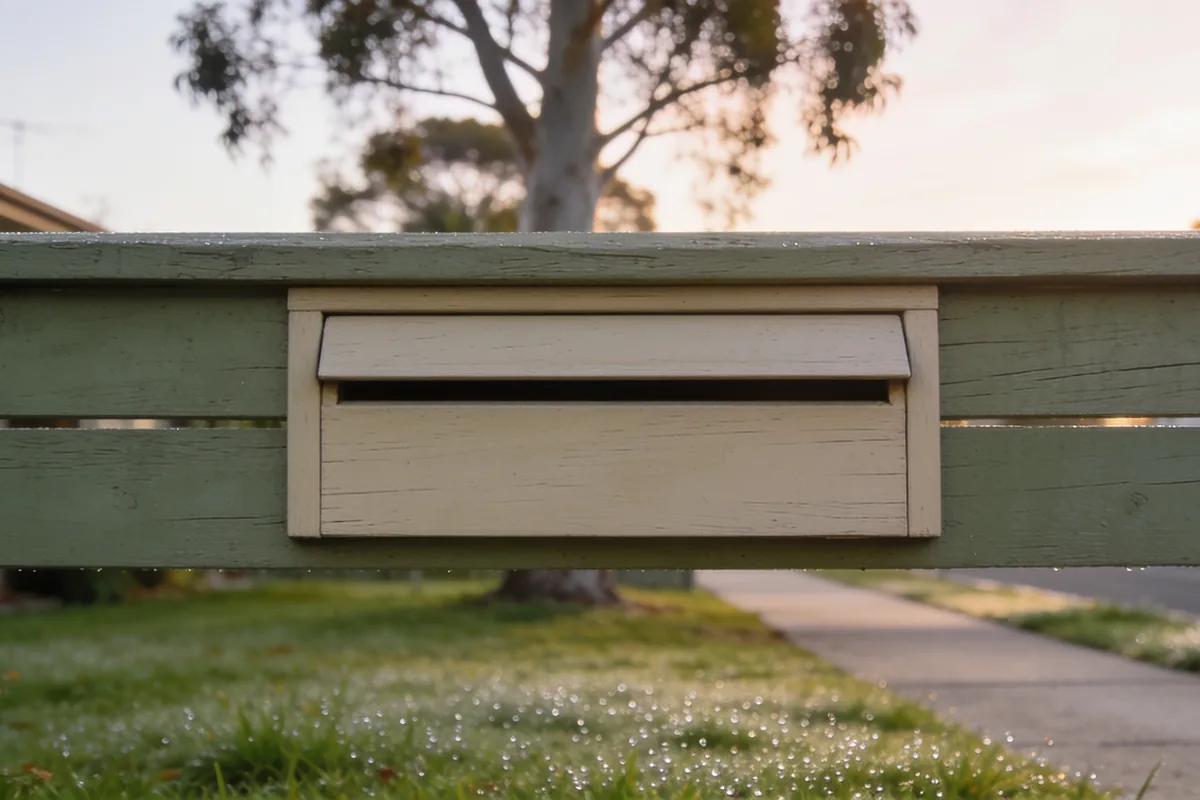
Put up the no junk mail sign. It has a delivery instruction behind it everywhere in Australia and, in two states, the law as well, and knowing which of those you’re leaning on decides who you ring when the leaflets keep coming.
The common line online is that a sign is only a polite request. That undersells it. Australia Post tells its delivery staff to honour the sign. In Queensland the law says a person must not deliver unsolicited advertising material past a clear one. EPA Victoria says that, so far as reasonably practicable, leaving advertising material in a mailbox with a “No junk mail” sign is illegal. Elsewhere the pages cited name no equivalent rule, so the lever is the industry complaint line and the business itself, and that order is set out below.
This is general information about letterbox delivery of printed advertising only. Email and SMS follow a different rule and aren’t covered here. Everything below describes the rules as at 2 June 2026.
What a no junk mail sign covers
Start with what the sign is for. Australia Post’s guidance says to put a “No Junk Mail” or “Addressed Mail Only” sign or sticker on your letterbox, and that its postal delivery officers are instructed not to deliver unaddressed mail to a letterbox that carries one. The limit is who that instruction reaches. Australia Post says it delivers about 10 per cent of unaddressed mail to households and “cannot guarantee that other unaddressed mail delivery companies will do the same”. The sign binds the postal officer. For everyone else, you’re relying on the rules in the next section.
The sign also has edges on the paper side. According to standards developed by the Australian Catalogue Association, as Australia Post describes them, political, educational, religious and charitable material is exempt. A sign won’t stop those.
The Queensland Government’s page, last updated on 26 June 2025, defines what the law is aimed at: advertising material for a commercial purpose that isn’t addressed by name. That covers takeaway vouchers, catalogues, real estate leaflets, fridge magnets and letters from tradespeople, and it includes mail addressed “to the householder” or “to the occupier”. Material that isn’t commercial advertising isn’t caught, such as political campaign material, neighbourhood watch letters, lost animal notices, council newsletters and infringement notices. Community newspapers are a special case. They become caught only after you tell the publisher in writing.
So the sign is aimed at unaddressed commercial leaflets. It was never going to stop the exempt categories, and mail addressed to you by name is a separate problem with its own register, covered in the ladder below.
Where the law stands behind the sign
Queensland first, because it’s the clearest. Section 107 of the Waste Reduction and Recycling Act 2011, in the version in force on 2 June 2026, says a person must not deliver unsolicited advertising material to premises if a legible sign or marking on the exterior mail receptacle, or on a boundary fence or gate by the footpath, says “No Advertising Material”, “No Junk Mail”, “Australia Post Mail Only” or words to similar effect, and it is clearly visible to the person delivering.
There are limits. Handing the material personally to a person at the premises is outside the rule (section 107(2)). Newspapers are outside it unless you have told the publisher (sections 106 and 107(3)). The Queensland department can give a person a compliance notice for a breach, and failing to comply with that notice is itself an offence (sections 248 and 251). Delivery has its own rule too. Section 108 says unsolicited advertising material must be placed securely in a receptacle, slot or other place used for the delivery of mail, in a receptacle used for newspapers, or under a door, and the Queensland page says the same. Section 112 puts a duty on whoever arranges a distribution: it must take reasonable steps so that the advertising material does not become waste, and the Act’s own example of a reasonable step is delivering in a way that is consistent with the Distribution Standards Board’s code of practice.
The Queensland Government page sets out the sign right under a heading about your rights under the law, which is a fair way to think about the sign there.
Victoria’s position comes from EPA Victoria’s litter page, updated on 9 May 2025. It says: “So far as reasonably practicable, it’s illegal to leave advertising material in mailboxes with a ‘No junk mail’ sign.” The qualifier is part of the rule, so keep it attached whenever you repeat the line.
For the other states and territories, the official pages this post draws on give no sign-specific rule. That’s a gap in what has been checked, not proof that nothing exists. Your state environment agency and your council are the places to ask.
Here are the positions side by side.
| Where | What the page says | Source and date |
|---|---|---|
| Australia Post delivery | Postal delivery officers are instructed not to deliver unaddressed mail to a letterbox with a “No Junk Mail” or “Addressed Mail Only” sign. Australia Post delivers about 10 per cent of unaddressed mail | Australia Post, Manage junk mail (version of 10 February 2025) |
| Queensland | Delivering unsolicited advertising material past a legible, clearly visible sign is unlawful. The complaint ladder starts with the Distribution Standards Board | Waste Reduction and Recycling Act 2011 (Qld), section 107, version in force on 2 June 2026; Queensland Government page last updated 26 June 2025 |
| Victoria | “So far as reasonably practicable, it’s illegal to leave advertising material in mailboxes with a ‘No junk mail’ sign” | EPA Victoria, Litter, updated 9 May 2025 |
| Other states and territories | No sign-specific rule found on the pages cited; ask your state environment agency and your council | Not a finding that no rule exists |
Make the sign do its job
Here’s the test, taken from section 107(1). Is the sign legible? Is it on the letterbox, or on a boundary fence or gate by the footpath? Could someone walking up to the property clearly see it? If all three answers are yes, the sign meets the Queensland test, and everywhere else it gives the postal officer the instruction they work to.
Wording matters less than visibility, but stay close to wording the sources list. The Act names “No Advertising Material”, “No Junk Mail” and “Australia Post Mail Only”, and Australia Post’s own page uses “No Junk Mail” and “Addressed Mail Only”. Words to similar effect count in Queensland, but a plain version is easy to read from the footpath.
A sign has to be clearly visible to the person delivering, so one on a door a deliverer never reaches may not meet the test. Neither does one tucked behind a hedge, or one so faded that nobody can read it. If the person with the leaflets can’t see the sign, you can’t expect them to obey it. Fix the sign before you blame anyone.
Who to ring when flyers still arrive
If leaflets keep turning up past a visible sign, work through the Queensland Government page’s own order. It’s useful in every state, because the first steps are industry ones and don’t depend on a statute.
Before you ring anyone, note the date, the street and what was delivered. Two minutes of notes make every call shorter.
- Keep the sign visible, and check it against the test above.
- Contact the Distribution Standards Board. The Queensland page prints 1300 083 241, so use that as the number as printed and check it before you ring.
- Ask the business whose leaflet it was to take your address off its distribution list.
- Register the address with ADMA’s Do Not Mail register. Australia Post’s page says it covers only ADMA member companies and addressed promotional mail, so it may not stop all unwanted mail, and Australia Post files it under addressed promotional mail.
- Ask Australia Post to note on the National Address File that your address doesn’t accept unaddressed mail. The Queensland page prints 13 13 18 for this, again as printed.
- In Queensland, once you’ve made a complaint to the Distribution Standards Board, the department has a reporting form for unsolicited advertising material.
Leaflets left on the ground follow the same path on the Queensland page: complain to the Distribution Standards Board first, then use the department’s form.
The order is the page’s own. Your notes, the industry body and the business come first, and in Queensland the department’s form follows a complaint to the industry body.
The fair case for the other side
The common view among householders is that a sign is only a polite request, and where no rule is cited that’s accurate. Many also say people delivering leaflets for local businesses are paid by the leaflet, which gives them little reason to look at a letterbox. Whether or not that’s so in a given street, the sign doesn’t stop the exempt categories, so some paper will arrive regardless.
A business that hand-delivers to a person at the door is outside the Queensland rule. And a household is free to take some catalogues. The sign is a choice, not a duty, and nobody is wrong to leave it off because they like the specials.
For a business reader, the advice is plain: treat any visible sign as a no, because in Queensland and, so far as reasonably practicable, in Victoria, delivering past a visible sign is against the law.
What to Do With the Sign Tomorrow
Three steps, each small.
- Fit the sign where a deliverer will see it: on the letterbox, or on the boundary fence or gate by the footpath, in plain words.
- Write down the first date something arrives anyway, then ring the Distribution Standards Board on the number above.
- Put the paper that does get through in the recycling bin, and check your council’s bin guide for what it takes. Our post on reading compostable and recyclable labels at the bin covers the packaging side, and a home waste check is a good way to see where the rest of your household waste goes.
The sign is the easy part. In two states it gives you a rule to point at, and everywhere else it gives you an instruction and a complaint line. Use all of it.
Sources: Queensland Government, Unsolicited advertising material (junk mail), last updated 26 June 2025 (https://www.qld.gov.au/environment/circular-economy-waste-reduction/litter-illegal-dumping/junk-mail); Waste Reduction and Recycling Act 2011 (Qld), sections 105 to 108, 111, 112 and 248 to 251, version in force on 2 June 2026 (https://www.legislation.qld.gov.au/view/whole/html/inforce/2026-06-02/act-2011-031); EPA Victoria, Litter, updated 9 May 2025 (https://www.epa.vic.gov.au/litter); Australia Post, Manage junk mail, capture of 10 February 2025 (https://web.archive.org/web/20250210235508/https://auspost.com.au/receiving/manage-your-mail/letterbox-management)