
Food
Ordering Tapas for the First Time, One Wave at a Time

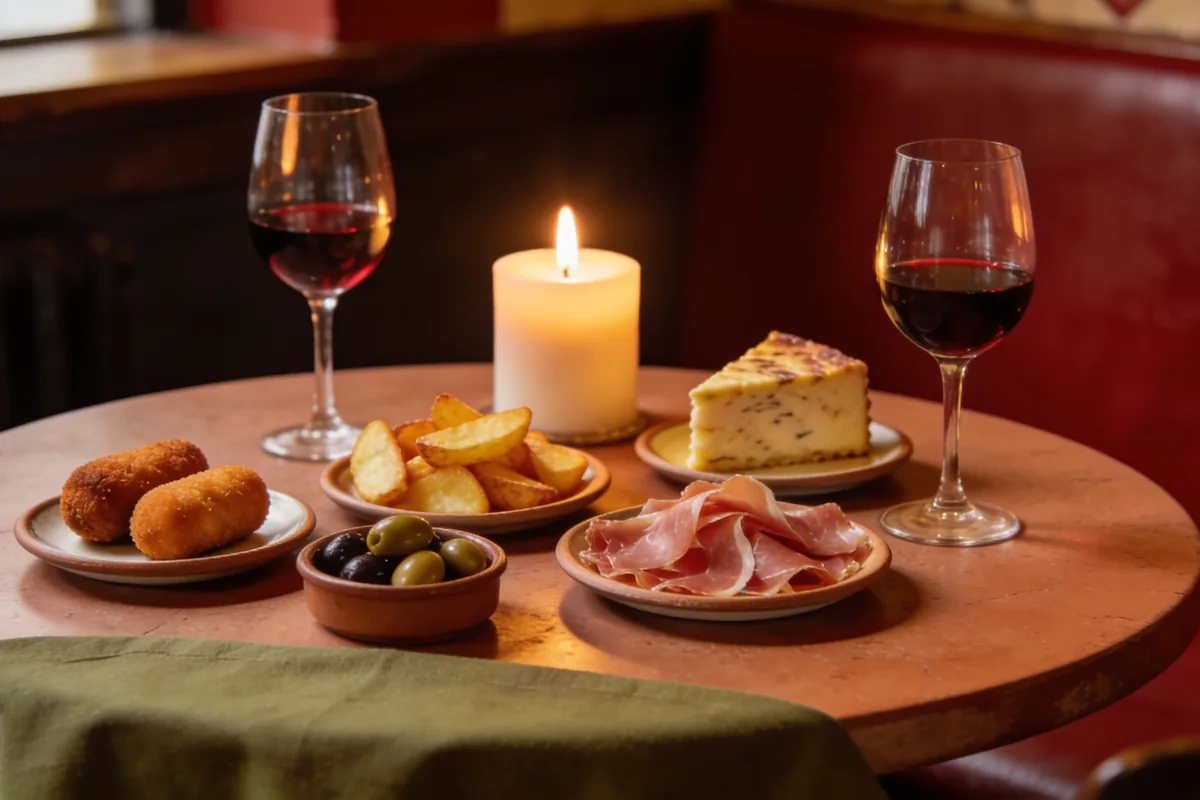
The menu is long and has no obvious starting point. Names are scattered down the page in small type, some familiar and some not: croquetas, patatas bravas, tortilla, pimientos, a plate of ham carved so thin it is nearly see-through. A table of four leans over it. One person says she’ll eat anything. Another is quietly counting how many dishes would be sensible and how many would be embarrassing.
Then a small plate lands in the centre of the table, and everyone reaches at once. Nobody has said how this works, and nobody wants to be the person who takes the last piece.
That is the first ten minutes of most first-time tapas dinners, and it is a perfectly ordinary place to start. The format is built for exactly this sort of hesitation, as long as the ordering follows a rhythm.
What the words mean
Tapas are small dishes meant for sharing. On many menus you will also see larger sharing portions, often called raciones, and sometimes a smaller version of one, a media ración. Pintxos are small bites, often served on bread, which some places set out at the bar to be picked up and counted at the end.
None of these terms needs to be mastered. If a menu is unclear, the person who brought it to the table will explain, and in a good tapas bar that is part of the point.
Order tapas in waves, not all at once
A tapas meal is more of a conversation than a single order, and it goes best in rounds.
The first round is for what is cold, simple or quick: olives, almonds, ham, a salad, something on bread. It gives the table something to pick at while the kitchen starts on the rest.
The second round brings the hot dishes: fried things, prawns in garlic, a potato dish, a tortilla, a small plate of grilled meat or vegetables. Dishes usually arrive when they are ready rather than all together, so the table fills and clears over time.
The third round, if there is one, is for the big plate or the thing everyone has been eyeing, plus perhaps something sweet.
Between rounds, stop and look at the table. If everyone is still reaching, order another round. If plates are sitting half full, you are done. The great mistake of the first-timer is ordering for the hungry version of the table at minute one, because the dishes keep arriving, and arriving.
How much to order
There’s no single right quantity. It depends on the appetite at your table, the size of the plates and whether you want a full meal or a light one. A common approach is to order fewer dishes than feels sensible and then add. You can always order more, but you can’t un-order a table full of plates.
When a menu mixes sizes, it’s worth asking the staff how big the plates are and how many they would suggest for your group. Staff in a good tapas bar answer that question many times a night.
Sharing, without the awkwardness
The unspoken rules are friendlier than they look.
- Plates go in the centre, not in front of one person.
- Use the serving spoon or fork if there is one, and your own cutlery if there isn’t.
- The last piece is fair game, though it’s polite to offer it round once.
- If something is a favourite, say so, and order another one.
If you have dietary requirements or allergies, tell the staff when you order. Small plates mean many ingredients, and the kitchen can only help with what it’s told. Vegetarian options are common on tapas menus, but do check how they’re prepared.
Why paella needs raising early
Paella is the dish that catches first-timers. It’s a rice dish cooked in a wide, shallow pan, and it’s usually cooked to order, which means it takes time. Some places make it only for a minimum number of diners, and some need a heads-up before you arrive.
So raise it early. Ask when you sit down, or when you book a table if you have booked, whether the paella needs to be ordered ahead and how long it takes. Then place the order at the start of the meal, so that it arrives when the tapas rounds are winding down, not an hour after the table has finished.
A small word about leftovers
If there are leftovers, most places will box them. What the box is made of is worth a glance, since takeaway containers add up quickly. If you’d like to think it through, the guide to eco-friendly packaging covers what to look for.
At the end of the table
Somewhere in the third round, the strangeness fades. The table has settled into passing and talking, and the person who counted dishes has stopped counting. The format has done its job.
Order in rounds, and let the table tell you when to stop.
Sources: No third-party figures are used in this article.


