
Home & Garden
Choosing a Concreter Starts With the Quote, Then the Reviews

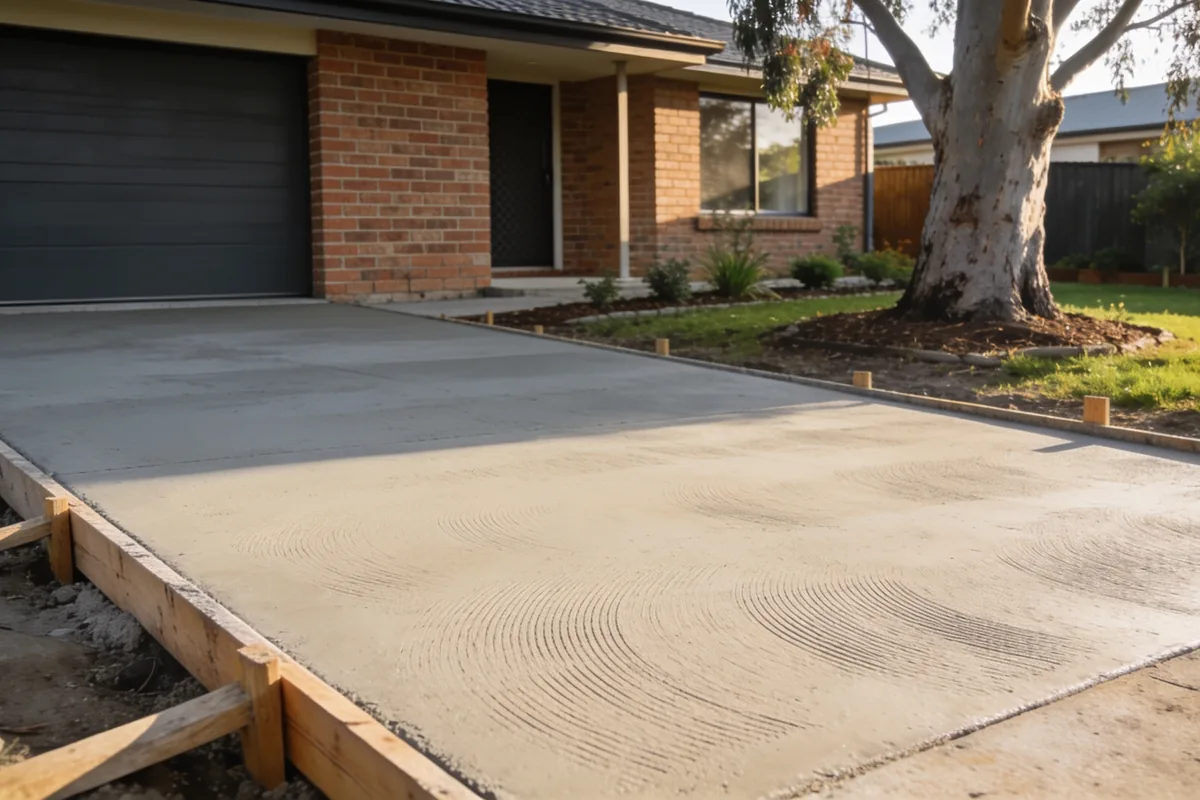
Job for today: write down what you want poured, then use that page to get three quotes. Thirty minutes of preparation is what separates a quote you can compare from three numbers you cannot.
- Write the job in one sentence: a driveway, a patio, a shed slab, a footpath. Two minutes.
- Add the size, the finish you want (broom, exposed aggregate, coloured, smooth) and what the surface will carry, such as a family car or a trailer. Ten minutes.
- Photograph the site, including any trees, drains, steps or slopes near it, and note where water should run. Ten minutes.
- Check what your state or council requires for the work, and whether a permit applies. Ten minutes.
- Send the same page to each concreter you are considering, so every quote starts from the same description. Five minutes.
That is the foundation. The rest of this guide is about what to do with the answers.
The position: read the quote before the reviews
Most “how to pick a concreter” advice leads with reputation: check reviews, look at photos, ask around. Those things are worth doing. But they come second. The quote comes first, because a quote is the only thing a concreter writes down before the work starts, and the detail in it is the best early sign of how the job will go.
Reviews tell you how people felt about a concreter. A good quote tells you what you will be getting. A vague line such as “supply and pour concrete driveway” leaves every decision about depth, preparation and finish to the day of the job, when you are not in a strong position to argue.
What a proper concrete quote should list
A concreting quote does not need to be long. It does need to say what is being built. Look for each of these, and ask about any that are missing:
- The area and the thickness of the slab, so you can compare like with like.
- The base preparation: removal of the old surface, how the ground is levelled and compacted, and what material goes underneath.
- Reinforcement: whether mesh or bars are included and where they sit in the slab.
- The concrete itself: the strength grade the job calls for. Ask why that grade was chosen for a driveway or a patio.
- Control joints and edges: where cuts go, since concrete cracks as it dries and joints decide where.
- Falls and drainage: how the surface slopes so water runs away from the house and does not pool.
- The finish, described specifically and not as “standard”.
- Curing and protection: how the slab is looked after in the days after the pour.
- Exclusions and extras: removal of spoil, tree roots, extra work if the ground is worse than expected.
- The payment schedule and the timeline.
If one quote lists most of these and the other lists none, the second is not cheaper. It is incomplete, and the missing items are the ones that tend to appear later as variations.
Licence and registration: check with the regulator, not the concreter
Requirements differ between states and territories, and they often depend on the size and type of the job. In some places concreting falls under a specific licence class, in others it is covered by builder registration for residential work above a certain value, and in others a smaller job needs no licence at all. The only reliable way to know is to check with the regulator for your state: the Building and Plumbing Commission in Victoria, Building Commission NSW, the Queensland Building and Construction Commission, or your own jurisdiction’s equivalent. Ask the concreter for their licence or registration details and look them up yourself.
Ask also about insurance. Public liability cover protects you if the work damages a neighbour’s property or injures someone, and for larger residential jobs there may be home warranty insurance requirements that vary by state. Read the policy details the concreter gives you, and check with the regulator what applies to your job.
The contract and the payment
For anything beyond a small repair, ask for a written contract and read it. Residential building work rules differ by state, including the form a contract must take, what it must contain and how much can be asked for upfront. Check the regulator’s guidance for the figures in your state. As a general habit, link payments to stages of completed work, not to dates, and keep copies of everything, including the photographs you took at the start.
Where reviews and word of mouth earn their place
The fair counterpoint is that reviews matter, and a few things appear only through them: whether a concreter turns up when they say they will, keeps the site tidy, answers calls and fixes a problem without an argument. A quote cannot show any of that. So use reviews after the quote, as a check on behaviour. Read the middle ratings as well as the best and worst, and look for patterns in the complaints: late finishes, communication, finish quality. One bad review means little, but the same complaint repeated is information.
It also helps to ask for an address of a finished job you can see in person, since a slab that has been through a few seasons shows how the work has aged better than any photograph. Look for hairline cracks that follow the joints, which are normal, as opposed to random cracking across the surface.
Check the ground before the truck arrives
Some of the costliest concrete problems start below the surface. Before the pour, find out where underground services run: a free national service exists to tell you where cables and pipes are before you dig. Find out where the drains and sewer lines sit, because slabs poured over a weakened or root-invaded pipe can crack and block later, which is why it is worth reading what tree roots and old pipes do to drains before you lock in a slab layout. And if the slab sits near a boundary, confirm where the boundary is. An explanation of the different types of surveyors will tell you who to call for that.
Ask the concreter what happens if they find something unexpected once the old surface comes up, and how it will be priced. A good answer is specific about the process and the likely range of problems, and does not make any promises about cost before the ground is open.
Timing and weather
Concrete is sensitive to heat, wind and rain on the day, and a good concreter will talk about the forecast and be willing to move a pour. A concreter who pours regardless of the weather is gambling with your slab. Ask how they handle a hot day, a windy day and a wet one, and ask what protection they use after the pour.
Before any deposit goes down
Compare the quotes line by line, not by total. Then phone the regulator to confirm the licence, and put one question to your preferred concreter: what would change the price after the work starts? Send that question in writing tonight.
Sources: Building and Plumbing Commission (Victoria), licensing and registration (https://www.bpc.vic.gov.au/); Building Commission NSW, building and trade licences and registrations (https://www.nsw.gov.au/business-and-economy/licences-and-credentials/building-and-trade-licences-and-registrations); Queensland Building and Construction Commission, licensing (https://www.qbcc.qld.gov.au/licences/apply-licence/available-licences); Before You Dig Australia (https://www.byda.com.au).


