Science & Nature
Leave a Flying Fox on the Ground and Call a Vaccinated Carer

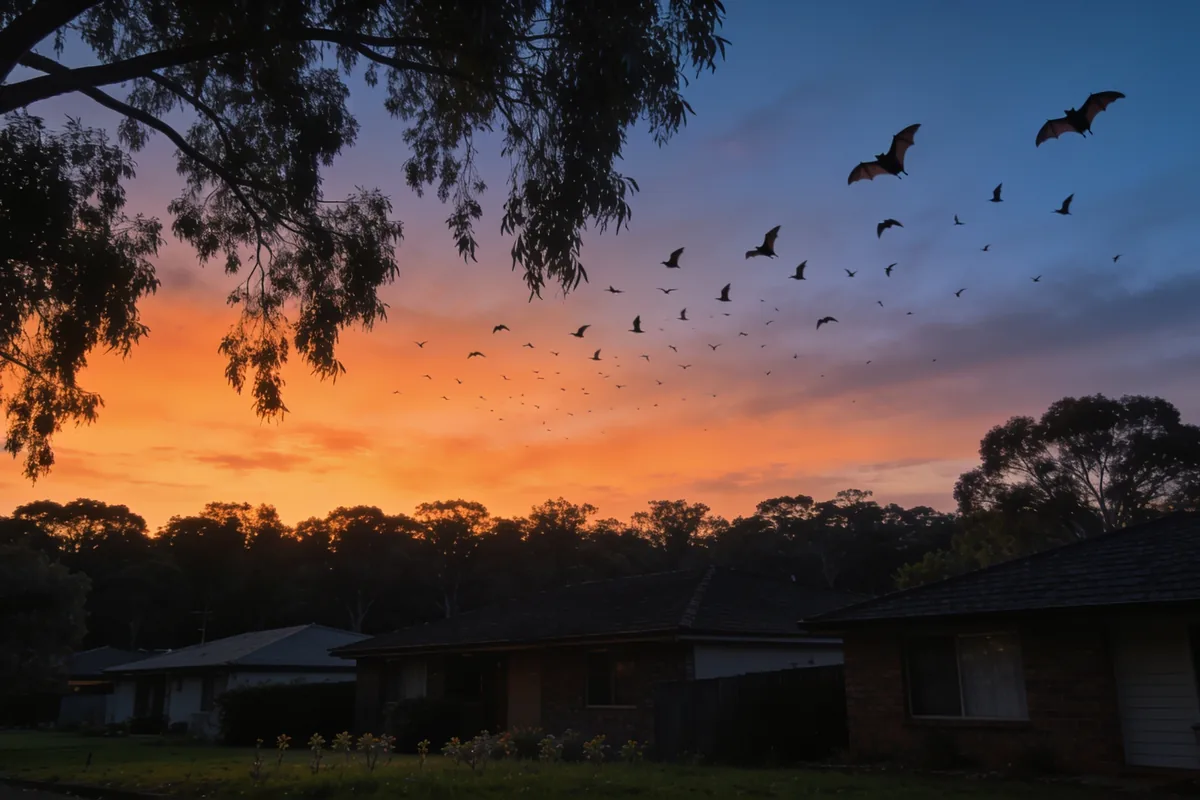
At dusk the sky over the suburb begins to fill from the east. It starts as a thin dark thread above the rooflines, then thickens into a slow, wide stream of wings, each beat unhurried, each shape spaced from the next as if by agreement. The flying foxes are leaving their camp for the night’s flowering and fruiting trees. Under them the street carries on with its evening: a sprinkler ticking, a screen door, a dog told to come inside. Nobody looks up for long. It happens every night, and it’s easy to stop noticing.
By morning the stream has gone and the trees it came from are quiet. The footpath is cool and a little damp, and the air smells of cut grass. Beside the kerb there is one shape that doesn’t belong. It’s dark and folded and close to the concrete, its wings wrapped around it the way they would be on a branch. But there is no branch, and it isn’t moving the way something on a branch moves. A head turns slowly. Or it doesn’t.
Someone slows down. Someone further along has stopped altogether.
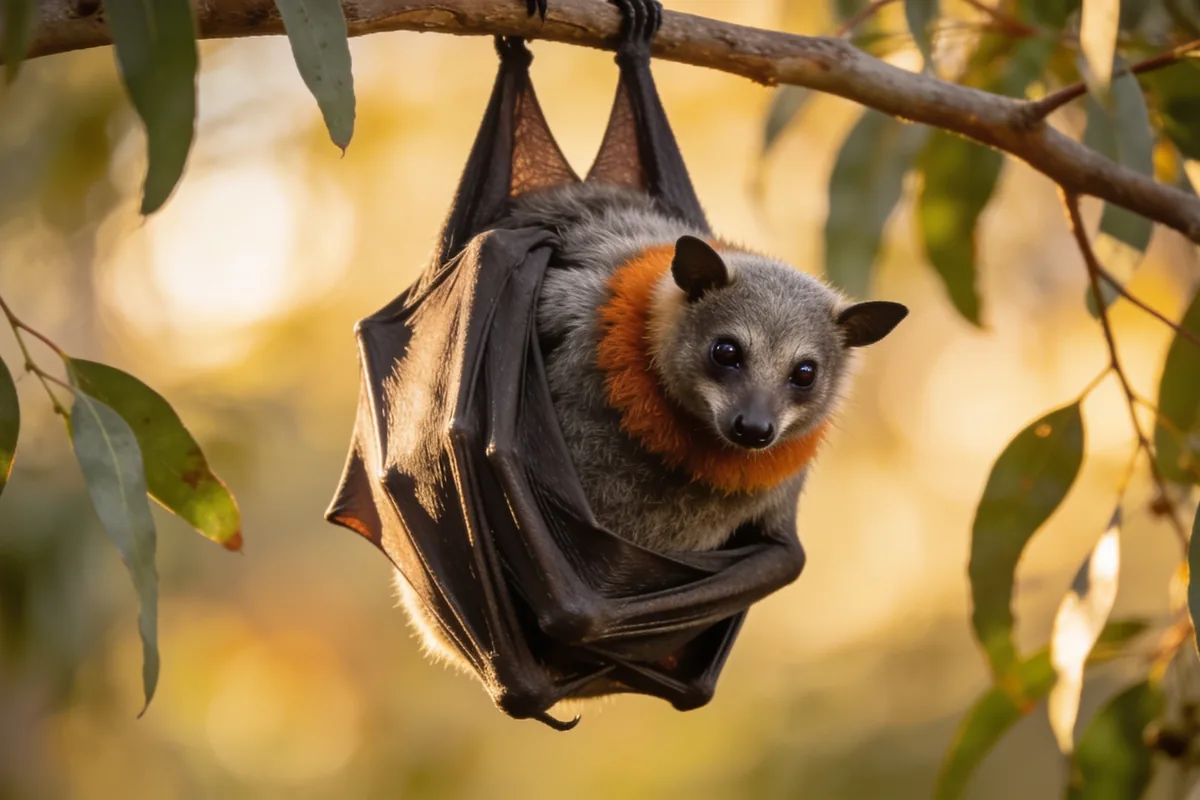
Why the one on the ground is not an average bat
Leave it. A flying fox on the ground, a baby or an adult, is not an animal to touch, even with good intentions. The reason isn’t that flying foxes are dangerous in general. They’re protected animals, and most of them are healthy. It’s that the one you can reach is the unusual one.
The Queensland Government’s flying-fox viruses page describes surveys of flying-fox populations that found “less than 1%” of the animals carry Australian bat lyssavirus. In sick and injured flying-foxes, “around 7%” were found to carry it. Victoria’s wildlife site says the same thing in plainer terms: “Infection rates in healthy wild populations are low, but higher in sick, injured or orphaned bats.” That’s the difference between the bats in the dusk sky and the one on the footpath.
Nobody can tell by looking. Healthdirect says “You can’t tell if a bat has the virus just by the way it looks or acts”, and NSW Health says a bat’s behaviour or appearance is “not a true guide as to whether it is carrying the virus”.
The illness is called Australian bat lyssavirus, and it’s closely related to rabies. According to Healthdirect, Queensland Health and NSW Health, it passes on through a bite or a scratch, or through saliva reaching the eyes, nose, mouth or broken skin. It doesn’t pass on through droppings, urine or blood. Healthdirect adds that “Living, playing or walking near bat roosting areas does not increase your chance of catching this virus.” NSW Health records “Only four cases of human infection” since the virus was first identified in 1996, three in Queensland and one in New South Wales, as at 27 November 2025. It’s rare. It’s also serious once symptoms start, and there’s no treatment at that stage, which is why the advice is about prevention.
The first five minutes
Here is what the health pages ask of anyone who finds one.
- Stay back. Keep children and pets away. The Northern Territory’s agricultural department says “Always keep children and pets away from bats.”
- Don’t rescue, cuddle or wrap it, even a baby. A baby isn’t a special case. Queensland’s wording covers any “sick, injured or orphaned” flying fox: “do not touch it.” Healthdirect says “do not try to rescue it.”
- Leave covering to the carer. Healthdirect says that if you need to, you can gently place a box or washing basket over the bat to protect people in the area while you wait for the rescue group, and Queensland Health says the same for a bat on the ground until a trained and vaccinated handler arrives. The Northern Territory says to keep your distance, and NSW Health says only “Do not touch the bat”. The safest default is distance. If the carer on the phone tells you to cover the animal, follow what they say.
- Ring a carer and stay on the line. The next section has the numbers.
- Don’t move it or put it in a box to carry. Healthdirect says “Only people who have been trained in handling bats and are vaccinated against rabies should ever touch bats or flying foxes.” That’s the carer’s job, and it’s why the title says vaccinated.
If a flying fox is dead, the health pages still say not to touch it, and Queensland Health adds that, if reasonable and practical, a dead bat can be left where it is. The Queensland Government page describes using a shovel or tongs and thick gloves if it has to be removed, and it says a bat that has bitten or scratched a person or a pet should not be disposed of, because it may need testing. Queensland Health says to contact the local council to find out what disposal is appropriate in your area.
Who to ring where you live
Which number to ring depends on the state, and the pages don’t all point to the same kind of service. Some name a single rescue line, some name a government agency as well as local groups, and two send you to a general category of helper. That’s why the table follows each page rather than a single directory. Whichever row is yours, make the call from a safe distance and keep your eyes on the animal rather than your hands on it.
The table gives each number exactly as the page prints it, with the page and its date. These are as printed at 11 August 2026.
| State or territory | Who to ring, as printed | Source and date |
|---|---|---|
| NSW | “WIRES wildlife rescue on 1300 094 737” | Healthdirect, Australian bat lyssavirus infection, last reviewed May 2025 |
| NSW (health advice) | “Contact experts at your local wildlife rescue group … Contact details can be found at NSW Wildlife Council or download the IFAW Wildlife Rescue App … A private veterinarian may also be able to offer assistance and advice.” | NSW Health fact sheet, last updated 27 November 2025 |
| Qld | “RSPCA (1300 ANIMAL), Department of Environment, Tourism, Science and Innovation (1300 130 372), or local wildlife care groups”; “RSPCA Qld … 1300 ANIMAL (264 625)” | Queensland Health condition page, last updated 24 September 2025; Queensland Government flying-fox viruses page |
| SA | “Fauna Rescue of South Australia Inc. Bat Hot Line on (08) 8486 1139 or Bat Rescue SA on 0475 132 093” | SA Health, Bats and staying safe around them, last updated 7 July 2025 |
| Tas | “Bonorong Wildlife Rescue on 0447 264 625 (all hours)” | Tasmanian Department of Health, Rabies and Australian bat lyssavirus (the same number appears in an April 2025 copy) |
| NT | “Wildcare on 08 89 886 121 or 0408 885 341” | NT Department of Agriculture and Fisheries, 23 April 2026 |
| ACT | “call ACT Wildlife on 0432 300 033” (the page’s number for an injured animal; the same page says “Do not attempt to rescue or handle bats or flying foxes”) | Parks ACT, Wildlife (undated page) |
| Vic | No flying-fox rescue number printed; the page footer lists “General enquiries and wildlife emergencies: 136 186”, and for exposure it says to “contact your Local Public Health Unit” | Victorian wildlife agency, Flying-foxes and your health, page last updated 4 October 2024 |
| WA | “the relevant state government authority or a local wildlife care group or rescuer” | WA Health, Rabies and lyssavirus (undated page) |
Numbers are as printed on each page on the date shown. If a number doesn’t connect, check the state page or ring the health line in the next section.
The table leaves out council contacts, private vets and opening hours beyond what a source states. It also leaves out a single national number, because none of the pages prints one.
If a bat has bitten or scratched someone
Timing counts here. Wash the wound thoroughly with soap and water for at least 15 minutes. Healthdirect says that, and so does NSW Health (“at least fifteen minutes”). The Queensland Health condition page, the Victorian page and the Northern Territory page agree on 15. The Queensland Government flying-fox viruses page says “at least five minutes”, and the same page says “Do not scrub the wound.” Use 15, the health departments’ figure, and wash gently.
Then apply an antiseptic with anti-virus action, such as povidone-iodine or ethanol, if you have some. If saliva has reached the eyes, nose or mouth, flush the area with water for several minutes.
Then get medical attention as soon as possible. Victoria’s page says to seek urgent attention “regardless of any previous vaccination, the severity of the wound or whether the flying-fox appears sick”. Healthdirect says “Even if you have had the rabies vaccine, you should follow these steps.” Waiting isn’t a good idea. Queensland Health says “The time from exposure to the start of symptoms is variable, ranging from weeks to years”, and that treatment after exposure, which can include wound care, a rabies vaccine and immunoglobulin if needed, is “ideally within 48 hours but can be given at any time following exposure”. It recommends this for people who’ve had the vaccine before, and for people who may be allergic, pregnant or breastfeeding. Whether treatment is needed is for a doctor to decide.
Three contacts: a doctor or hospital, Healthdirect on 1800 022 222 (24 hours, with a registered nurse), and in Queensland 13 HEALTH (13 43 25 84).
What if you’ve touched the bat with a towel or a glove, and weren’t bitten or scratched? On the definition these pages use, an exposure means a bite, a scratch, or saliva reaching the eyes, nose, mouth or broken skin. Without any of those, there hasn’t been an exposure. But NSW Health says to speak to a health professional or the local public health unit if it’s unclear, and that’s worth doing.
The point of the 15 minutes and the prompt medical visit is that this is preventable.
What about the dog or the cat?
Pets get a short answer because the pages give one. Queensland says that if a flying fox has bitten or scratched a dog or a cat, you should contact the nearest Department of Agriculture and Fisheries office or call 13 25 23, and “Do not dispose of the flying-fox”, because it will need testing. The Northern Territory says to keep pets away from bats. NSW Health says a private vet may offer advice.
None of the pages cited here gives a pet-specific number outside Queensland, so the vet is the person to ask. First aid for the animal is beyond what these pages cover.
The practical step is simpler than any phone number. A flying fox on the ground in a backyard is within easy reach of a curious dog or cat, so bring pets inside and keep children indoors or well back before you do anything else. That’s the same advice as the first step above, applied to the animals in your own household.
The fair point: protected, rare and worth keeping
Anyone who says a flying fox on the ground should be left alone because it’s struggling has the right instinct. Victoria’s page puts it this way: “Flying-foxes are protected species and important for our environment.” Human cases are rare. And leaving the animal alone isn’t abandoning it. The carers on the other end of the phone are the rescue, so the call is the help.
It’s also why this post doesn’t ask anyone to avoid flying foxes in general. The dusk fly-out over your street and a camp in the trees are no cause for worry: according to Healthdirect, living, playing or walking near roosting areas doesn’t increase the chance of catching the virus. The risk comes from contact with an injured animal, and that’s the contact the steps above prevent.
If the animal in the street makes you think about the wildlife around your own home, leaving room for wildlife in a home garden is a more everyday way in: water, shelter and food, offered to what already lives nearby.
Who to Ring Tonight
The footpath is empty now, and the stream of wings will rise again at dusk, as it does every night.
Put the number for your state in your phone before you need it.
Sources: Australian bat lyssavirus infection (ABLV), Healthdirect Australia, reviewed May 2025 (https://www.healthdirect.gov.au/conditions/viral-infections/australian-bat-lyssavirus-infection); Rabies and Australian bat lyssavirus infection fact sheet, NSW Health, 27 November 2025 (https://www.health.nsw.gov.au/Infectious/factsheets/Pages/rabies-australian-bat-lyssavirus-infection.aspx); Australian bat lyssavirus, Queensland Health, 24 September 2025 (https://www.qld.gov.au/health/condition/infections-and-parasites/viral-infections/australian-bat-lyssavirus); Flying-fox viruses, Queensland Government (https://www.qld.gov.au/environment/plants-animals/animals/living-with/bats/flying-foxes/about-flying-foxes/viruses-carried-by-flying-foxes); Flying-foxes and your health, Victorian Government wildlife site (https://www.wildlife.vic.gov.au/our-wildlife/flying-foxes/flying-foxes-and-your-health); Bats and staying safe around them, SA Health (https://www.sahealth.sa.gov.au/wps/wcm/connect/public+content/sa+health+internet/conditions/bites+stings+and+pests/bats+and+staying+safe+around+them); Rabies and Australian Bat Lyssavirus, Tasmanian Department of Health (https://www.health.tas.gov.au/rabies-and-australian-bat-lyssavirus); Australian Bat Lyssavirus: stay safe, don’t touch bats, NT Department of Agriculture and Fisheries, 23 April 2026 (https://daf.nt.gov.au/news/2026/australian-bat-lyssavirus-stay-safe,-dont-touch-bats); Rabies and lyssavirus, WA Health (https://www.healthywa.health.wa.gov.au/Articles/N_R/Rabies-and-lyssavirus); Wildlife, Parks ACT (https://www.parks.act.gov.au/before-you-go/wildlife)


