Automotive
For Most Australian Drivers, a Better Tyre Beats a Winter Tyre

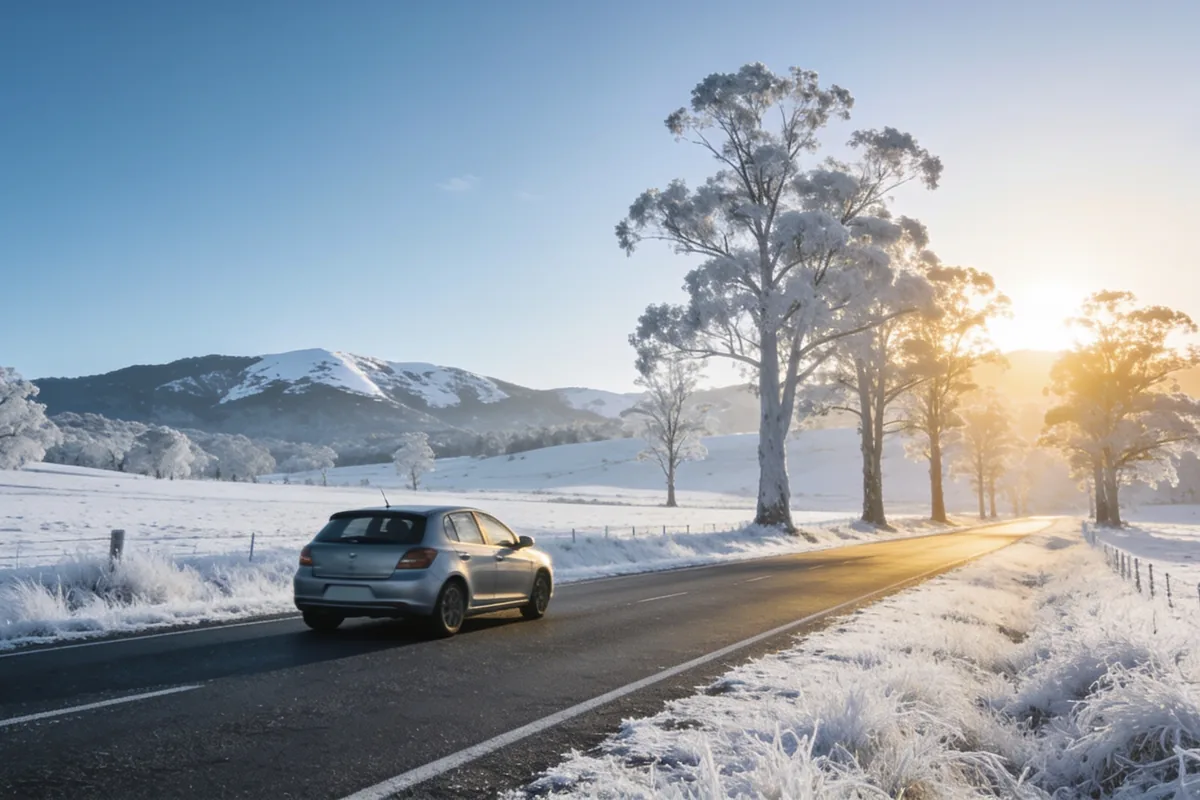
Finding: for most Australian drivers, a seasonal tyre swap is not required, and the money is better spent on a good tyre in good condition than on a second set. The exceptions are narrow and specific: regular driving in alpine areas, and some remote or gravel use where a different kind of tyre is the real answer.
The advice that circulates on this subject often comes from markets with long, freezing winters, where fitting winter tyres in autumn and summer tyres in spring is routine. That pattern does not transfer to a country where most capital cities seldom see ice. Applying it here produces a recommendation that is accurate for Northern Europe and unhelpful for a commuter in Adelaide or Brisbane.
Why the northern-hemisphere rule does not travel
Winter tyres use a softer rubber compound and a tread pattern cut for snow, slush and cold pavement. Their advantage is greatest when temperatures sit low for weeks and roads are regularly covered in snow or ice. In most Australian cities that combination does not occur, so the compound’s advantage rarely appears, while the costs of owning a second set remain: purchase, a changeover twice a year, and somewhere dry to keep the set that is off the car.
Two statements often attached to this advice also need correcting for local readers. A fixed temperature at which to change over, usually quoted in the northern guides, is built around European winters and does not describe an Australian climate. And the tread figure that appears in many overseas articles belongs to the rules of the country that published it. In Australia the legal minimum is set by state and territory road rules, so the figure to use comes from your own road authority, not a foreign blog. What can be said generally is that the limit applies across the tread, not at the best-looking spot, and that tyres carry tread wear indicators, small raised bars in the grooves, which show when a tyre has reached it.
The options side by side
| Tyre type | Where it fits in Australia | Strength | What it leaves out |
|---|---|---|---|
| Standard road (summer-biased) | Most passenger cars, most of the year | Predictable grip and braking on dry and wet sealed roads | Little help on snow or ice |
| All-season | Drivers with mixed conditions and the occasional cold trip | One set covering a wide range, no changeover | A compromise at the extremes, and quality varies between models |
| All-terrain | Four-wheel drives, gravel and dirt | Resists cuts and copes with loose surfaces | Often noisier on bitumen, and not a substitute for a wet-road tyre |
| Winter or snow | Regular driving on snowfield roads | Grip on snow and cold pavement | Limited need and availability elsewhere, plus a second set to store |
The table is qualitative on purpose. Prices, stopping distances and wear rates differ by brand, size and vehicle, and any single number would date quickly or mislead. What each row excludes is the useful part: no option is best everywhere, and the cost of the wrong choice shows up in the conditions the tyre was not built for.
When winter conditions do apply
Alpine areas such as the New South Wales snowfields are the real exception. In Kosciuszko National Park, NSW National Parks requires two-wheel-drive vehicles to carry snow chains on named roads in the snow season, and chains must be fitted when signs or officers direct; for four-wheel and all-wheel drive they are recommended. Other alpine areas set their own rules, so confirm them with the relevant park or road authority.
Two practical points apply to anyone who drives to the snow once or twice a year:
- Chains are the simpler answer for an occasional visit. They are used when conditions demand them and then removed, which suits a trip of a day or a weekend better than buying a second set of tyres. Practise fitting them before you reach the snow.
- Tyre choice still matters on the way. A tyre with sound tread and correct pressure behaves better on cold, wet mountain roads than a worn one of any type.
For a household that drives on snowfield roads every winter, a dedicated set is a reasonable purchase. For most others it is an expense that does not pay back.
Reading the sidewall before you buy
Whichever type is chosen, the sidewall carries the information that matters. It lists the tyre size, a load index and a speed symbol. The vehicle’s tyre placard, usually found on a door pillar or in the owner’s manual, states what the manufacturer specifies. The safe approach is to fit tyres that meet or exceed those ratings, not to choose on price alone. A tyre rated below the vehicle’s requirement may be unsuitable for the loads and speeds the car can legitimately reach.
A short check before any purchase:
- Match the size printed on the placard.
- Confirm the load index and speed symbol are at least what the placard states.
- Check the manufacture date marked on the sidewall, since older stock that has sat in a warehouse is not the same product as a fresh tyre.
- Ask what the supplier recommends for how you drive, whether that is school runs, highway distance or loaded trips.
Storage, if you do run a second set
For the households that hold two sets, storage affects how long the spare set lasts. Clean the tyres and let them dry. Keep them in a cool, dry place out of direct sun. Stack tyres on rims lying flat, or stand unmounted tyres upright, as the manufacturer advises. Tyres that sit in heat and sunlight can crack and age faster than their tread would suggest.
What to do instead of buying a second set
If the aim is safer driving in wet and cool conditions, the evidence points to maintenance before equipment. Pressure set to the placard value on a cold tyre, tread well above the legal limit, and no sidewall damage deliver more of the benefit than the tyre type does. Wear shows up first as uneven patterns, and an uneven pattern can point to alignment or balance problems, which is covered in what wheel balancing does and when you need it. Noise and vibration that arrive without warning are worth reading about in what strange noises from your car can mean. And the habits that stretch tyre life, from pressure checks to rotation intervals set by your owner’s manual, are laid out in tyre care that pays you back.
The counterargument deserves a fair hearing. Some drivers who cover long distances through varied country may prefer an all-season or all-terrain tyre because it covers more situations with one purchase, and that is a sensible reading of their circumstances. The finding above does not forbid that choice. It says the seasonal-swap model, as written for cold-climate countries, does not describe most Australian driving.
Where the money should go
For the typical metropolitan driver, a quality standard or all-season tyre matched to the placard, replaced before the tread reaches the limit, is the efficient purchase. For the snowfield driver, chains or a dedicated winter set. For the gravel driver, a tyre designed for that surface. In each case the decision follows the roads in use, and a calendar-based changeover does not enter into it.
Sources: Australian Government Department of Infrastructure, Transport, Regional Development, Communications, Sport and the Arts, Australian Design Rules and vehicle standards (https://www.infrastructure.gov.au/infrastructure-transport-vehicles/vehicles/vehicle-design-regulation/australian-design-rules); NSW National Parks and Wildlife Service, Kosciuszko National Park winter driving information (https://www.nationalparks.nsw.gov.au/safety/alpine-safety/snow-driving); Parks Victoria, alpine area visitor information (https://www.parks.vic.gov.au); state and territory road authorities for the legal minimum tread depth (no single national page applies).


Pingback: Wheel Balancing or Alignment? Match the Symptom