Food
Telling Smash, Pub and Gourmet Burgers Apart at the Counter

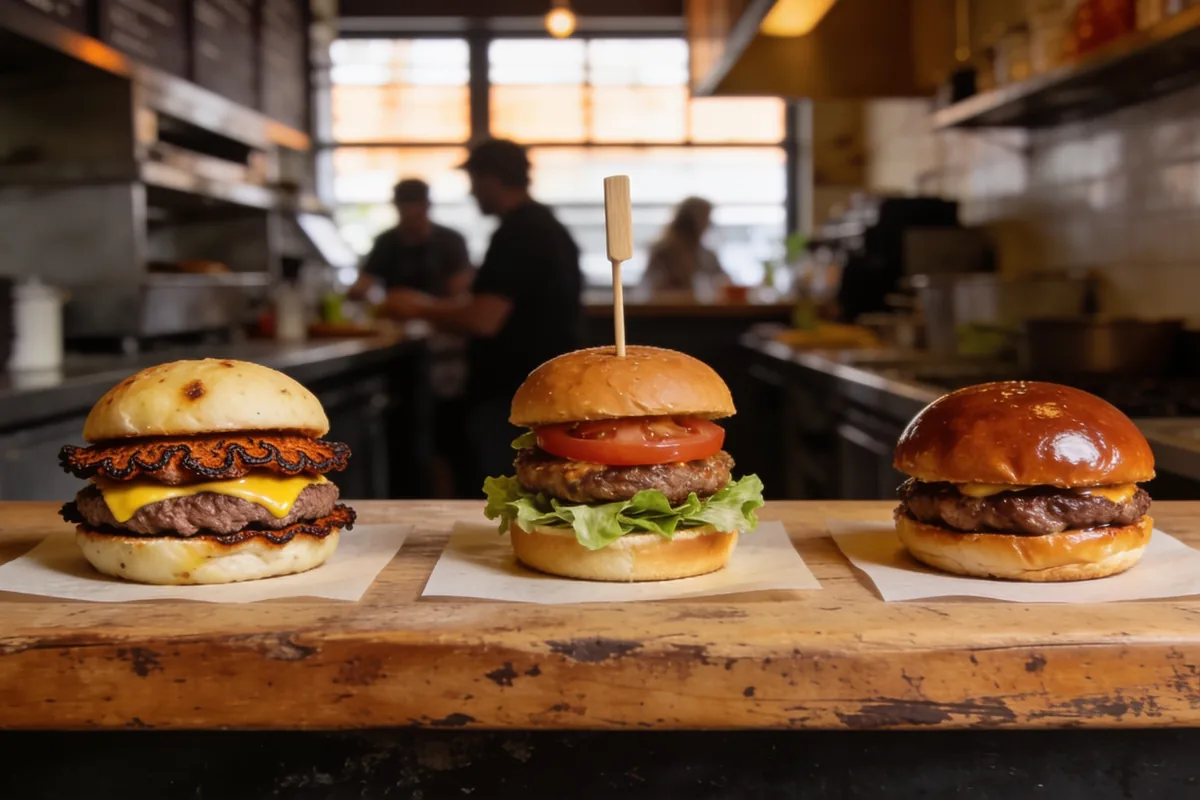
The grill is already loud when the queue reaches the counter. A chalkboard lists four burgers, and beside it a laminated card says something about “smash”. Behind the pass, a cook drops a ball of mince onto the flat top and leans on it with a heavy square press until it spreads thin and spits. Two tables over, someone is being handed a burger as tall as a paperback, held together with a skewer.
Both are burgers. They are not the same food, and the person at the counter is about to choose between them on the strength of a name.
That is the moment this guide is for: ten seconds with a menu and a hungry crowd behind you. Most burgers sold in Australia fall into four broad styles, and each style rewards a different order. Once you can tell which one you are looking at, you know most of what matters about the texture, the cooking and what to ask for. We take them one at a time, then give you a decoder you can check on your phone in the queue.
Smash: the crust is the point
A smash burger starts as a loose ball of mince, not a formed patty. The cook presses it flat on a very hot surface, so far more of the meat touches the metal. That contact browns the surface hard and leaves a lacy, crisp edge. The patty ends up thin and cooked through in a short time, which is why smash burgers are so often sold as doubles: a single thin patty is mostly crust and can feel slight in a soft bun.
The build is usually plain. Cheese melts straight onto the meat, then come pickles, onion and a sauce, all in a bun that has been steamed or lightly toasted. The restraint is deliberate. A smash burger buried under six toppings loses the thing it was built to show off.
How to order it: go for the double with cheese. Don’t ask how it is cooked, because the method means it is cooked through by design. If you want extra, add one topping, not four.
Pub: thick patty, big plate
The pub burger is the one many Australians grew up with. The patty is thick and formed by hand or machine, and the topping list is generous: lettuce, tomato, cheese, often beetroot, bacon or an egg. It usually arrives with chips on a large plate, and the whole thing is meant to be a proper feed.
Thickness changes the cooking. Food safety guidance in Australia is generally to cook minced meat all the way through, so a thick patty tends to arrive well done and relies on fat, sauce and the toppings for moisture. Some venues offer a pink centre, but that is the venue’s own decision and its own food safety controls, not a house rule you can count on from a pub menu.
How to order it: ask for the sauce on the side if you like to control it, and skip the extra side if chips already come with the plate. The pub burger is the one to pick when you are properly hungry and want a meal rather than a snack.
Gourmet: when the bun and the build do the talking
Gourmet burgers lean on the bun and the extras: brioche or potato rolls, aged cheese, house relish, a fried onion, a premium cut or blend of beef. They tend to cost more and stand taller.
The risk with the style is crowding. Add enough layers and no single flavour comes through, and a tall build can be hard to eat without losing half of it to the plate. A fair rule of thumb is to read how the menu describes the patty. A kitchen that names the meat and how it is prepared is putting its attention on the part that matters. A menu that lists only the toppings is putting the effort around it.
How to order it: pick the burger with the clearest idea behind it, and ask whether it can be cut in half if it comes tall. The gourmet burger is the one to choose when you want a sit-down meal and a more composed plate.
Plant-based: judge it on its own terms
Plant-based burgers come in two kinds. One is a vegetable and grain patty, soft and savoury, tasting of what it is made from. The other is built to imitate beef, from pea or soy protein, and aims for a meaty chew. They are different foods, and it helps to know which one you are ordering before you decide whether you like it.
Menus can hide a few catches. The bun, sauce or cheese may contain egg or dairy, and a patty cooked on a grill shared with beef may not suit someone who avoids meat for ethical or allergy reasons. If you have an allergy, tell the staff directly, since a menu is not an allergen guarantee. Allergy & Anaphylaxis Australia publishes guidance on eating out that is worth reading before you go.
How to order it: ask what the patty is made from and whether the grill is shared. Then choose it for what it is, not as a stand-in for the beef version.
The decoder
Here is the whole thing in a table. Nothing in it depends on a particular venue, because the styles show up on menus everywhere.
| Style | The patty | How it is cooked | What a good one looks like | Watch for |
|---|---|---|---|---|
| Smash | Thin, pressed on a hot surface | Cooked through, quickly | Crisp, lacy edges and a juicy middle | Too many toppings hiding the crust |
| Pub | Thick, formed | Usually cooked through | Moist, with simple fresh toppings | Dry patty propped up by sauce |
| Gourmet | Thick or medium, premium blend | Varies, ask the venue | Balanced build, patty clearly described | A stack too tall to eat |
| Plant-based | Vegetable and grain, or meat-style | Varies by product | Seasoned patty, good bun | Hidden dairy or egg, shared grill |
Use it as a quick filter. If a menu describes a thin, pressed patty, it is smash. If it gives a generous topping list and chips, it is pub. If the bun is named before the patty, it is gourmet.
Why “best burger” is the wrong question
Burger roundups tend to rank venues against each other as if every burger were chasing the same goal. A crisp smash double and a loaded pub burger are not competing for the same appetite. One is a quick, intense bite and the other is a meal. Ranking them on one list tells you very little about which you will enjoy.
A better starting point is the style you feel like. Decide that first, and the choice among venues narrows to a short list of menus that offer it. It also makes a menu easier to read, because you stop comparing prices across things that were never alike.
The same habit works when you are planning a night out more broadly: decide what kind of meal you want before you pick the place. If you are in the mood for something different for dinner, that is a good order to work in.
At the counter
Back in the queue, the cook has flipped the smashed patties and the edges have gone the colour of toast. Behind you someone is reading the board with the same uncertain look you had a minute ago. The tall burger has gone back to the kitchen to be cut in half.
Name the style first, then order.
Sources: Healthdirect Australia, Food safety (https://www.healthdirect.gov.au/healthy-living/food-and-nutrition/food-safety); Allergy & Anaphylaxis Australia, eating out guidance (https://allergyfacts.org.au/living-with-allergies/daily-management/eating-out/)


You must be logged in to post a comment Login