Home & Garden
Build an Eco-Friendly Garden in Four Jobs, Starting With One Sheet of Paper

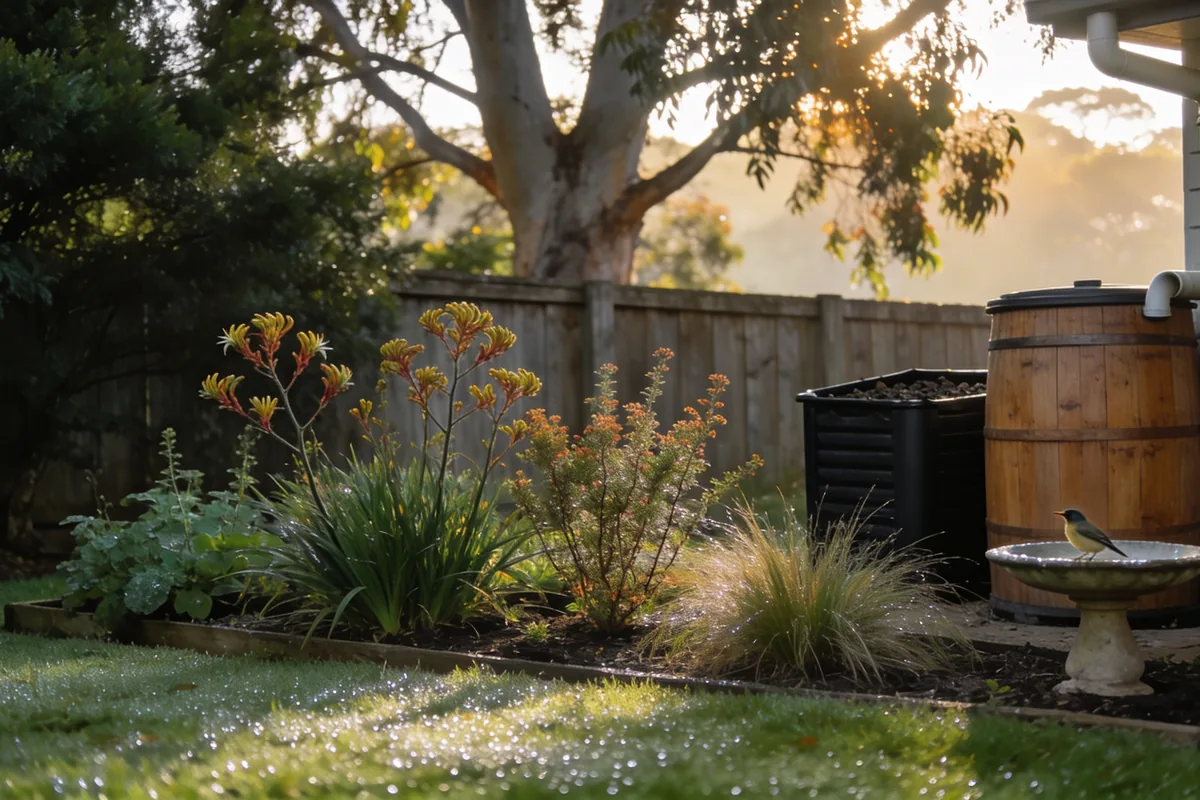
Job for today: walk your yard with a pen and one sheet of paper, and mark five things. It takes about 20 minutes, and it tells you where every later job goes.
- Find the sunniest and the shadiest corners and write “sun” and “shade” on the page. Five minutes.
- Stand beside the downpipe nearest the garden and note where the water ends up: a path, a lawn or a bed. Three minutes.
- Choose a spot near the kitchen door for a compost bin. Two minutes.
- Mark any patch of bare soil that gets little foot traffic. This is your first bed for native plants. Five minutes.
- Note any birds, lizards, bees or frogs you already see, and where you see them. Five minutes.
That page is the whole plan. An eco-friendly garden is not a shopping list. It is four habits (plants that suit your patch, water that stays on your block, scraps that turn into soil, and a few places for wildlife) and you can start all four with what is already in the yard.
Plants need prepared ground
Most guides lead with a plant list, and job one below does too, with one condition. A native plant dropped into bare, baked ground is a struggling plant, and a struggling plant is the quickest route to a gardener deciding that natives “don’t work”. The plant was never the problem. The ground was. That is why jobs two and three, water and compost, belong in the same weekend as the planting.
The fair counterpoint is that some people want colour this season and will plant first. That is fine, and a few well-chosen plants in a pot or a prepared corner will teach you a lot. Just keep the rest of the bed for after the soil work, because roots go where mulch, moisture and structure already are.
Job one: choose native plants that match your patch
Australian native does not mean one thing. A plant native to a wet coastal gully behaves nothing like one from a dry inland plain, so “native” is a starting point, not a guarantee. The useful test is local: does the species occur naturally near you, and does it suit the sun and moisture on your sheet of paper?
- Look up species recorded in your suburb. The Atlas of Living Australia lets you explore plants and animals by area. Fifteen minutes.
- Visit a local native nursery and take your sun and shade notes with you. Staff there can match species to your soil. One trip.
- Group plants by how much water they need, so you are not drowning one to keep another alive. Ten minutes on paper.
- Check how far roots will spread before you plant anything large near a drain or the house. Roots are the reason old sewer pipes block, which is covered in why tree roots and old pipes keep blocking the same drain. Five minutes.
- Spread a thick layer of mulch over the bed and keep it off the plant stems. One afternoon.
Mulch is the quiet hero here. It shades the soil, slows evaporation and feeds the ground as it breaks down. It also keeps weeds under control without a spray.
Job two: catch and slow the water
Water is where the rules start to matter, and they differ by state and by council. Some places require tanks on new homes, some offer rebates, and some regulate how a tank has to be plumbed or screened. Rainfall is the other variable. A tank that fills quickly in one city may sit half empty in another. Check what your council and state water authority say before you buy anything, and use rainfall records from the Bureau of Meteorology to judge how much water your roof can realistically collect.
If a tank is not on the cards, you can still keep water on your block:
- Redirect one downpipe so it runs onto a garden bed rather than the street. Check that the water will not pool against the house. Thirty minutes.
- Dig a shallow dish-shaped dip at the bottom of the bed so rain soaks in rather than running off. One afternoon.
- Water early or late, and water deeply and less often, so roots follow the moisture down. Ongoing.
If you do install a tank, screens on the inlets and overflow keep mosquitoes out, and a first-flush diverter keeps the first dirty runoff from the roof out of the tank. Ask the supplier or your plumber what applies where you live.
Job three: turn scraps into soil
A compost bin is the cheapest way to improve poor soil, and it keeps kitchen waste out of landfill. The method is simple. Green material (fruit and vegetable scraps, coffee grounds, fresh lawn clippings) is wet and breaks down quickly. Brown material (dry leaves, shredded cardboard, straw) soaks up moisture and keeps air moving. Layer both, keep the pile damp like a wrung-out sponge, and turn it now and then.
If your pile smells, add more brown and turn it. If nothing is happening, add water and more green. Keep meat, dairy and cooked food out of a backyard bin, because they attract pests. If you have no room for a bin, a worm farm or a council food-waste service does the same job on a smaller footprint. If you want a short checklist for the bin itself, see a home waste checklist.
Finished compost goes on top of the soil as a thin layer under the mulch. You do not need to dig it in.
Job four: leave room for wildlife
A garden that works for wildlife needs only three things: water, shelter and food.
- Put out a shallow dish of water with a few stones in it so bees and small birds can land without drowning. Five minutes, refilled in hot weather.
- Leave a corner of leaf litter and a few logs undisturbed. Lizards, beetles and frogs use them. Two minutes, ongoing.
- Plant in layers: groundcovers, shrubs, then a small tree if there is space. Different animals use different heights.
- Skip the sprays. Insecticides kill the insects that feed everything else in the garden, and most pests are managed by a healthy mix of plants and the animals that eat them. Ongoing.
What to skip
A lawn is not a sin. If children or pets play on it, keep a patch and let the rest become a bed. Skip the “eco garden kits” that arrive in plastic and promise instant results, because gardens take a season or two to settle. Skip imported mulches or fertilisers with a long delivery chain when a bag of local compost does the same work. And skip the urge to do it all in one weekend, because a garden built in stages survives better than one built at once.
Your first weekend, in order
Saturday morning: finish the walk-through page and lay mulch on the bare patch. Saturday afternoon: set up the compost bin where you marked it. Sunday morning: visit a native nursery with your notes. Sunday afternoon: put out the water dish.
Next job: pick one downpipe and decide where its water should go.
Sources: Atlas of Living Australia, Explore your area (https://biocache.ala.org.au/explore/your-area); Bureau of Meteorology, climate and rainfall data (https://www.bom.gov.au/climate/data/); your state or territory water authority and local council for tank and rebate rules (no single page applies nationally).


Pingback: Compostable Packaging: Check the Standard, Not Just the Word
Pingback: Beat Fast Fashion by Wearing What You Already Own